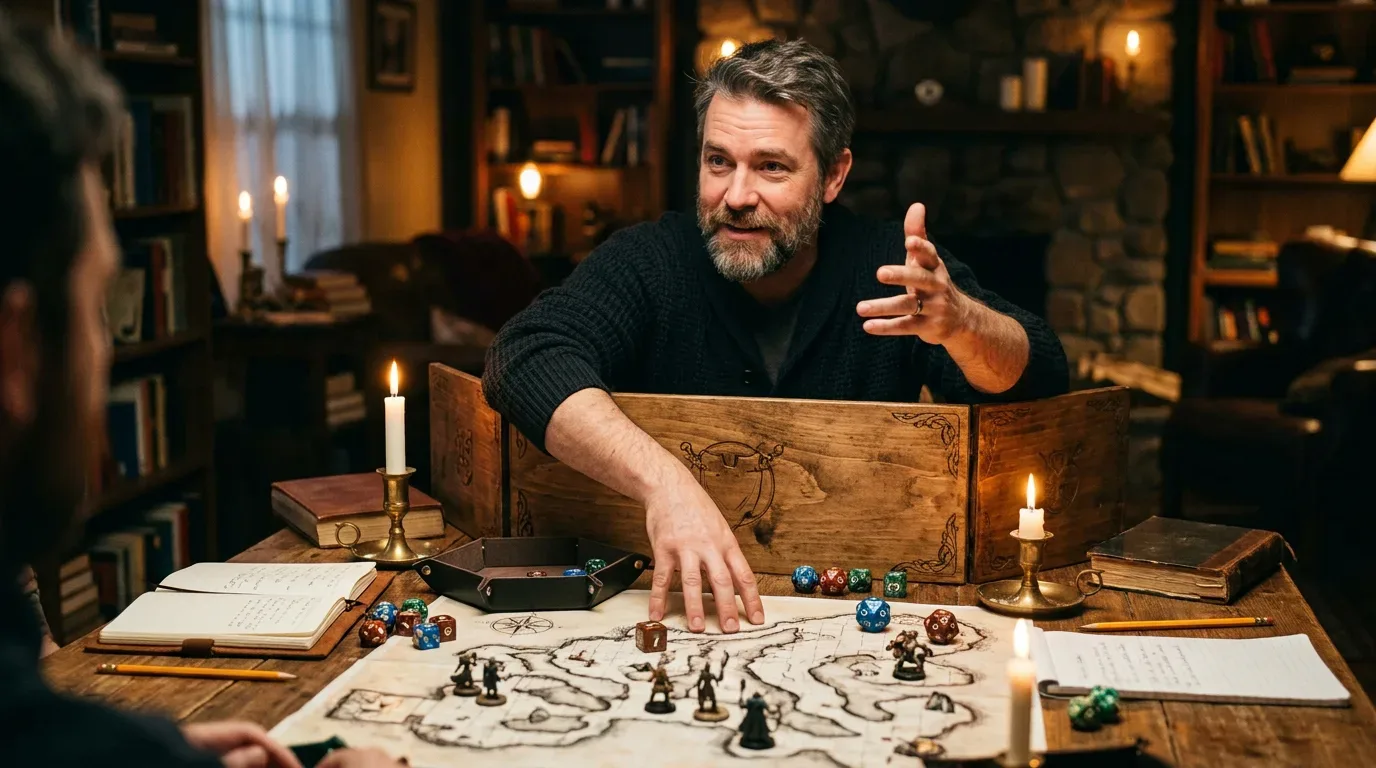
I was 8 when a gamebook first landed in my hands, pulled off my older brother's shelf, and the way I read was never the same again. If you came here wanting to understand what this gamebook thing actually is, pull up a chair and let me tell you, from someone who spent his whole childhood cheating on his own dice rolls.
What is a gamebook?
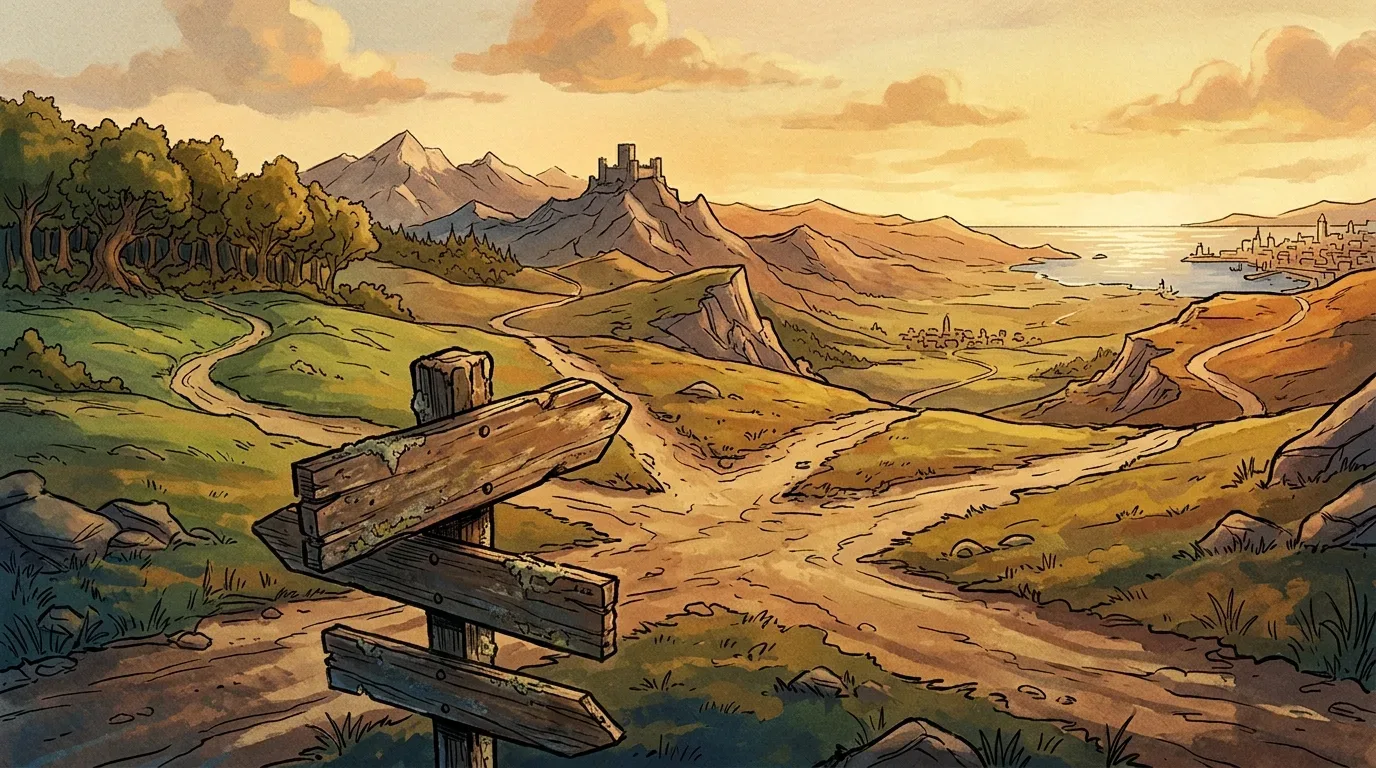
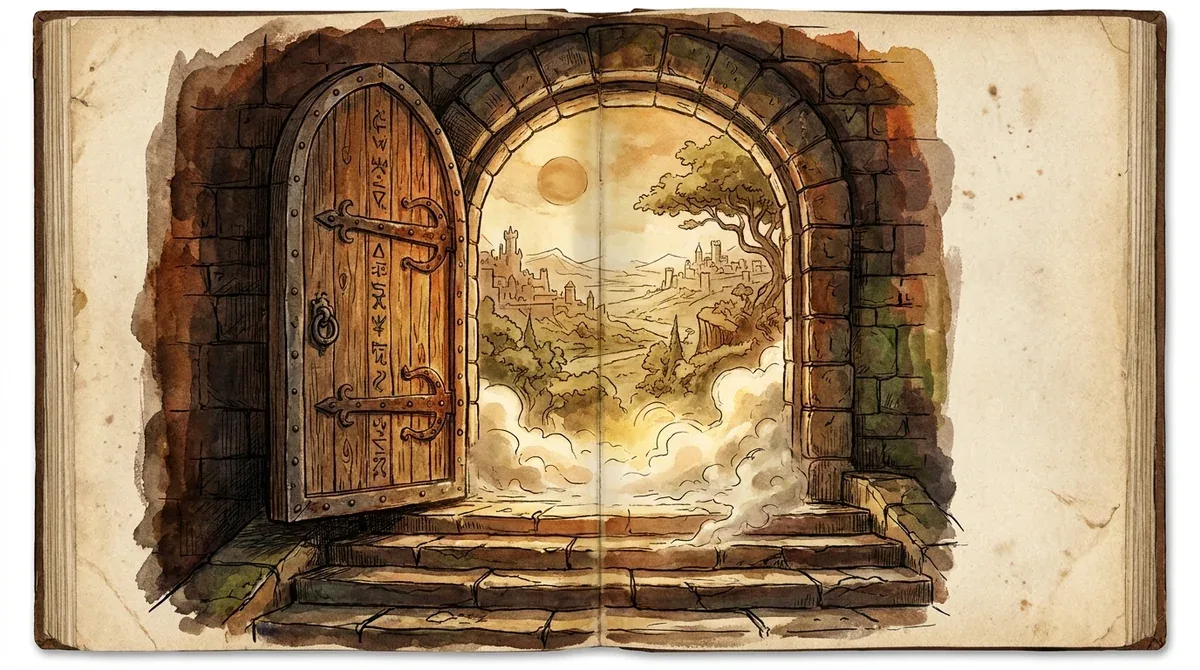
A gamebook is a book where every choice you make changes where the story goes. Picture it as a trail through a forest. The author walked it before you and opened up every possible path, driving two signposts into the ground at each fork. They don't walk beside you, but they left the whole world built and ready: the signs that say "turn to page 84" or "read paragraph 15," the trap hidden behind one choice, the treasure at the end of another. You go in alone and, at each fork, you decide which way to turn. The forest and the trails are always the same for everyone, but the single path that gets drawn is yours alone, because you're the one who chose every bend. And, like in any real forest, some paths lead to the mountaintop and others to a cliff's edge. Instead of pages in sequence, the text is split into numbered sections and pages, and at every important moment the narrative stops and offers you options: open the locked door or keep going down the hallway, trust the stranger on the road or draw your sword. Each choice takes you to a different part of the book, and that's how your version of the adventure takes shape, all the way to one of several possible endings.
That's why the format also became known as "choose your own adventure." You are, at the same time, the one reading it (the narrator, following the book to the letter) and the one living the story (the player making the decisions).
How it works, in practice
The mechanism is beautifully simple. You read a section, it ends with something like "if you decide to head down into the dungeon, turn to page 84 and read entry "B"; if you'd rather go back to the village, turn to page 112," and you jump to the page you picked. That finger holding the previous page, kept there in case the choice went wrong, is a memory everyone who lived through it recognizes instantly (yes, it's cheating, but let's be honest, it was almost unavoidable).
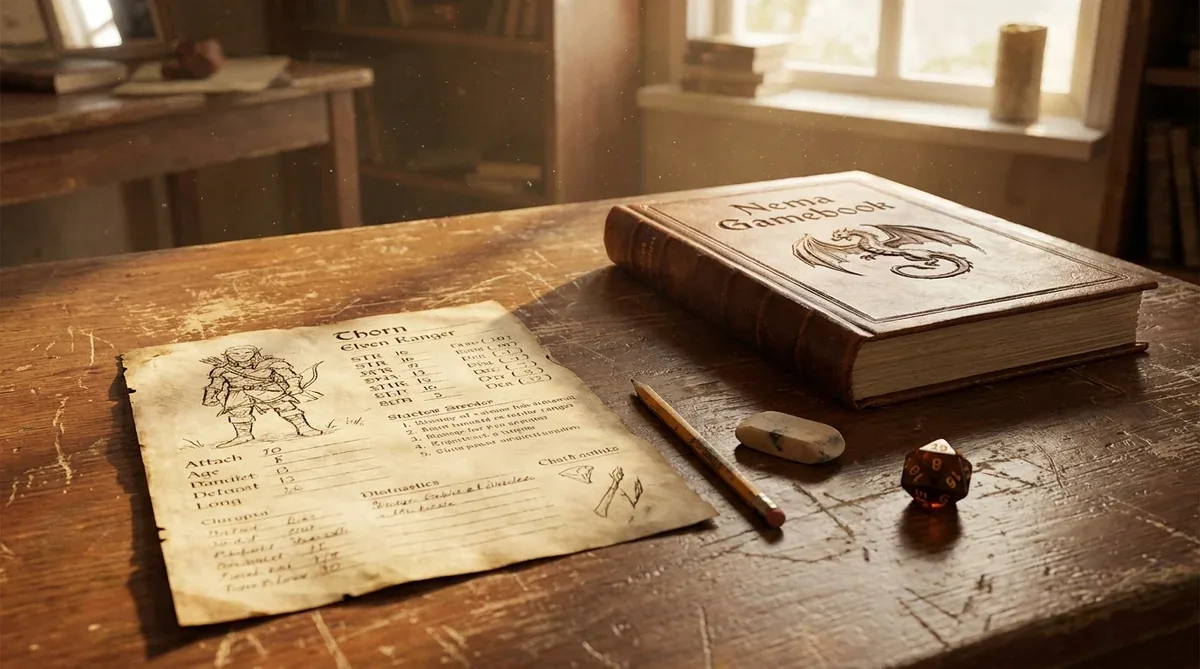
Within the format there are two great schools, and the difference between them explains a lot. The American school, represented by the Choose Your Own Adventure series, bets on pure choice: the fun is in branching the plot and finding out where each decision leads. The British school, launched by Fighting Fantasy, brought the RPG into the book. You'd build a small character sheet with stats (in Fighting Fantasy they were Skill, Stamina, and Luck) and resolve combat by rolling six-sided dice right there, following short rules. It was this second school that turned the gamebook into an RPG adventure one person could play solo.
Where it came from: the history of the gamebook
The seed was planted back in the '60s. American author Edward Packard wrote "Sugarcane Island" in 1969, published in 1976, with the then-unusual idea of letting the reader decide where the plot went. The concept became a phenomenon in 1979, when Bantam launched the Choose Your Own Adventure series, starting with "The Cave of Time." It sold more than 250 million copies and was translated into over 35 languages, peaking among '80s kids.
The leap that matters to anyone who loves RPGs came in 1982, in England. Steve Jackson and Ian Livingstone, co-founders of Games Workshop, rode the Dungeons & Dragons craze and, through Puffin, released "The Warlock of Firetop Mountain," the first title in the celebrated Fighting Fantasy line. It was Fighting Fantasy that married choose-your-own-adventure with dice and a character sheet, delivering the thrill of an RPG table to someone playing alone, with no Dungeon Master or group needed. The series reached around 59 books before its original run ended in 1995, and sold somewhere around 20 million copies through the '80s and '90s.
In Brazil: the Aventuras Fantásticas
Over here, Fighting Fantasy arrived under the name Aventuras Fantásticas, published by Marques Saraiva from the late '80s and through the '90s. There were about 28 main adventures, plus spin-offs like the Sorcery! series (renamed Artes Mágicas) and the Crônicas de Creta. Years later, the publisher Jambô would bring the series back in Brazil.
For an entire generation of Brazilians, myself included, those books were the first door into RPGs and fantasy. At a time when almost all RPG material existed only in English, my brother's gamebooks were in Portuguese, and it was through them that this world grabbed me for good. Drawing my character on paper, rolling the dice, and turning the page dying to know what came next was enough to keep me up late.
Gamebook, tabletop RPG, and a regular book: what's the difference?
The difference is in how much freedom and how much company each one asks of you. In a regular book, the story is fixed and you follow it from start to finish. In a tabletop RPG, the freedom is almost total, but you depend on a group, a Dungeon Master, and a night that fits everyone's schedule. The gamebook sits in the sweet spot between the two: it has the intimacy and structure of a book, with the agency and dice of an RPG, and you play alone, at your own pace, whenever you feel like it.
The gamebook didn't die, it just shed its skin
In the '90s, the format lost ground to video games, and the original Fighting Fantasy wrapped up around 1995. Plenty of people declared the genre dead, and they were wrong. From the 2010s on, the gamebook came back with new life, first in apps and e-books, then boosted by crowdfunding and even Steam releases. Those who grew up with the format never stopped loving it, and a new generation is discovering all of it right now.
What playing a gamebook is like today
The soul is still the same: choices with weight, dice in hand, a character who grows. What changed is the frame. Today you can live a gamebook right in your browser, with every scene illustrated, a soundtrack to drop you inside the world, and the game keeping track of your decisions so the ending reflects everything you did along the way. And where Fighting Fantasy settled everything with three stats and a six-sided die, today you can go much deeper, using the depth of a full RPG system, like the 5th edition of 2024, inside the structure of a gamebook.
It's the same magic as that book borrowed from my brother, now without having to hold two pages with your finger.
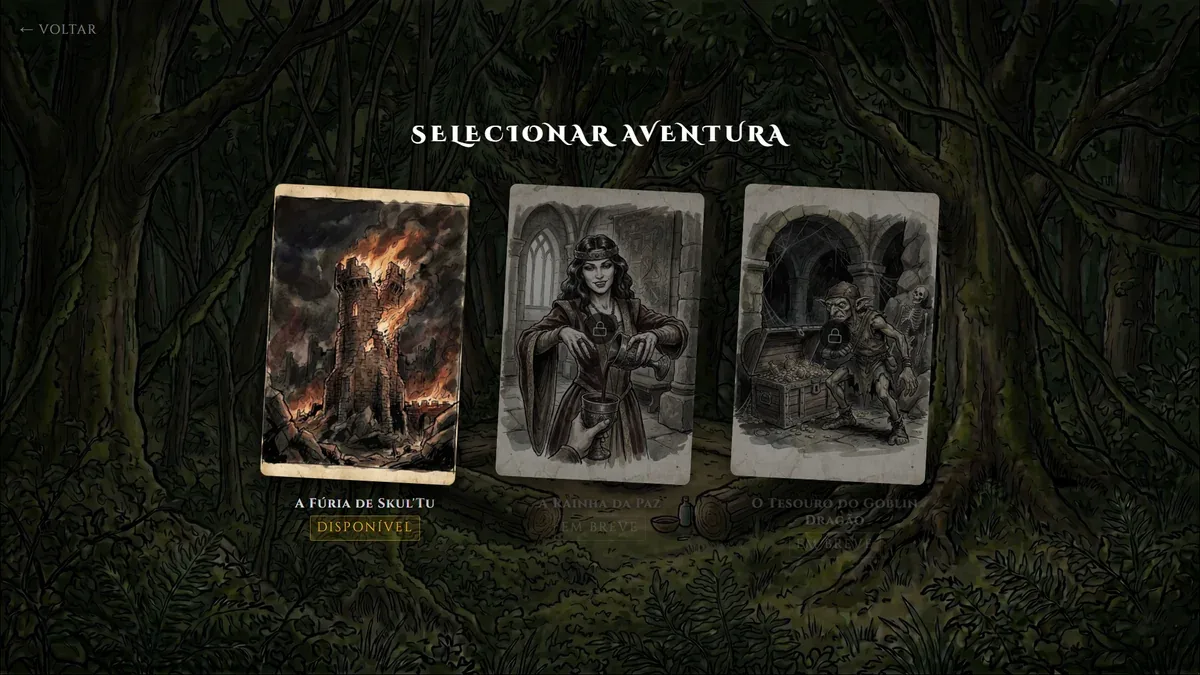
If that 8-year-old with a die in his hand reminded you of someone, maybe yourself, Mysteries & Perils is my hope of bringing that feeling back, in the browser, both for those who lived the golden age and for those who'll only discover it now. [Join the waitlist] and follow along as it comes together.
By Mario, creator of Mysteries & Perils, a Baldur's Gate 1 fan raised on gamebooks.
Sources and further reading
- Gamebook (Wikipedia)
- Choose Your Own Adventure (Wikipedia)
- Fighting Fantasy (Wikipedia)
- Fighting Fantasy on Titannica (community wiki)
- Aventuras Fantásticas (Wikipedia, PT)
- Aventuras Fantásticas, the Brazilian home of the series
- How Choose Your Own Adventure books brought choice to gaming (ScreenRant)