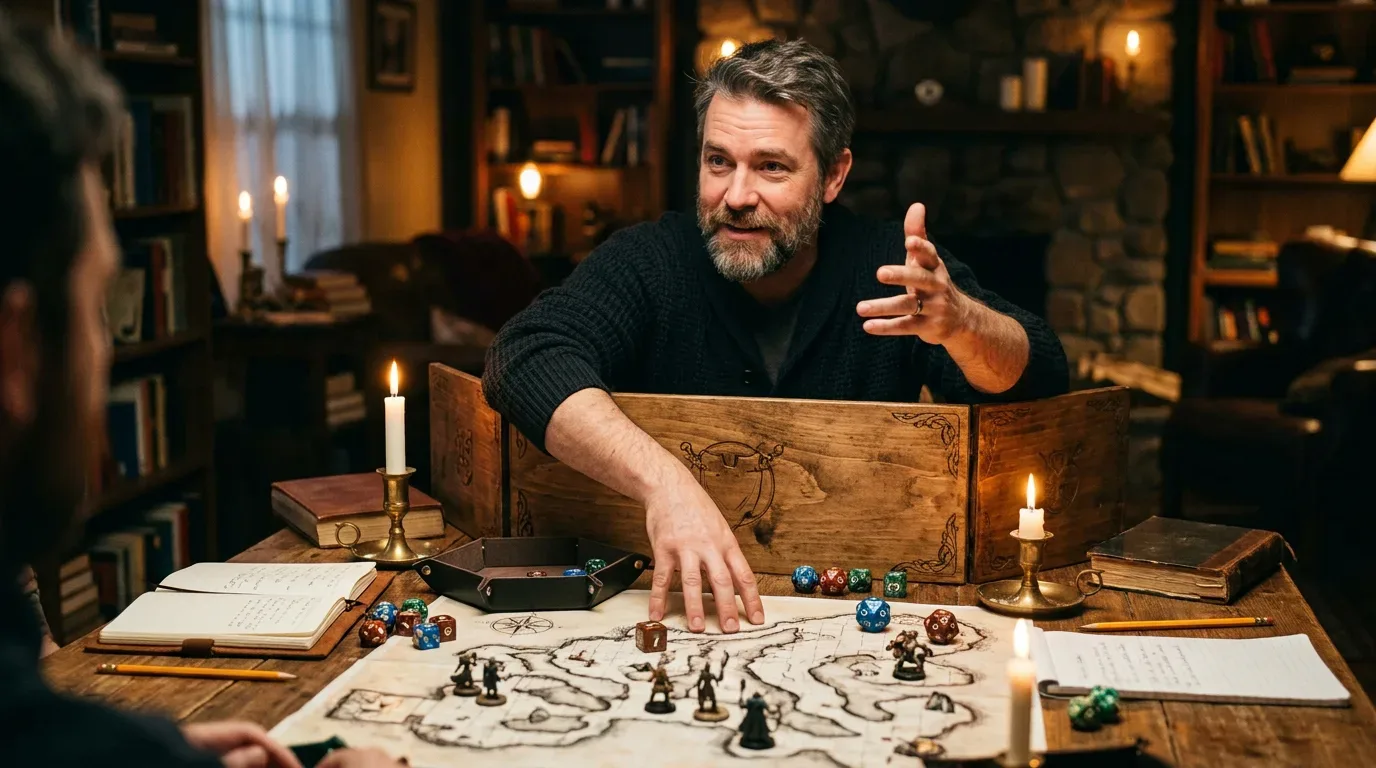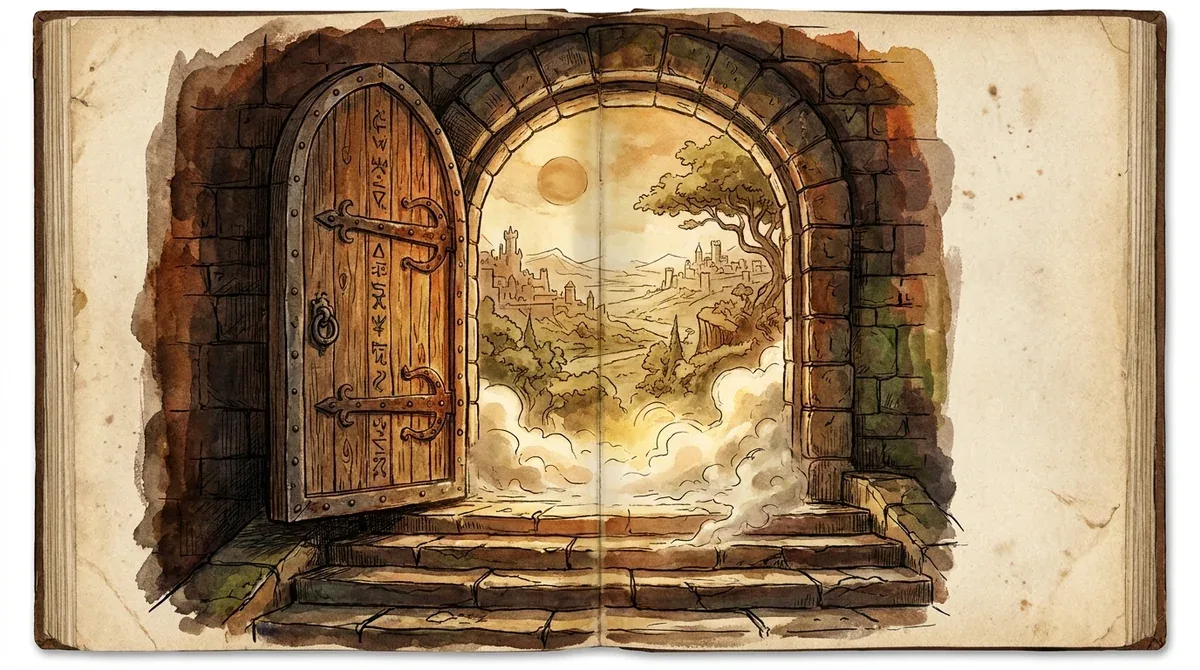
There's a pain everyone who loves RPGs knows. The urge to play hits, and then comes the hard part, which was never about the dice: gathering the group, lining up four adults' schedules, finding a willing Dungeon Master, pinning down that blessed Friday night. I know that pain from both sides, because I got into RPGs playing alone, with a gamebook at age 8, long before I ever sat at a real table. And I've got good news for you: yes, you can play RPGs solo, and it's no consolation prize.
Can you play RPGs solo?
You can, and in several ways. Playing RPGs solo, what's known as solo RPG, means living out a roleplaying adventure without relying on a group or a human Dungeon Master. And by human, I don't mean the alternative is "AI," but rather a book, a story read aloud, an audiobook, and so on. You can do it in four ways: with a gamebook, with systems built for a single player, with oracles that take on the Dungeon Master's role, or with digital games that run in your browser. Let me walk through each one.
And it's no recent fad. Gary Gygax himself, co-creator of Dungeons & Dragons, published dungeon-generation rules for solo play as early as 1975, in The Strategic Review magazine, and they later made their way into the AD&D Dungeon Master's Guide. Playing solo has been part of the hobby from the very start. What changed is that, over the past few years, especially after the pandemic left so many people unable to schedule a table, this quiet little corner became one of the fastest-growing segments in RPGs, with a huge community gathered in spaces like r/Solo_Roleplaying on Reddit, and hundreds of independent games published on platforms like itch.io.
Why would anyone play RPGs solo?
The most obvious reason is the one that opened this piece: you can't always get the group together. But anyone who plays solo quickly discovers the reasons go well beyond "I had no one to play with."
- The direction is yours. On the more open paths, like oracles, you steer and the story goes wherever your curiosity takes it; in a gamebook, you walk your own path through a written story, with choices that carry weight. Either way, no one decides for you.
- Your own pace. You can play ten minutes or three hours, pause in the middle of a dungeon and come back next week. The adventure waits for you.
- Zero logistics. No scheduling, no group chat, no rescheduling. The table is set whenever you want.
- A calm, creative space. A lot of people use solo RPGs as an almost meditative hobby, writing and imagining in their own corner. It's a treat for anyone who likes to dive into a story alone.
- A way to practice. Playing solo is one of the best ways to learn a new system or to practice being a Dungeon Master, without an audience.
The ways to play RPGs solo
There are four main paths, from the simplest to the most open.
1. Gamebooks (the easiest way in)
The gamebook is the most straightforward solo RPG there is: the adventure comes ready-made, the text stops and gives you the choices, and some even come with a character sheet and dice built in. It's where a lot of people started, myself included. If you want a taste of playing solo without preparing anything, start here. (I wrote a separate guide on what a gamebook is and how it works.)
2. Systems made for solo play
There are RPGs designed to run without a Dungeon Master, which makes them perfect for solo. The best known is Ironsworn, by Shawn Tomkin, free as a PDF, where the story is pushed forward by the vows your character makes. There are also gems like Thousand Year Old Vampire and Five Parsecs From Home, each with its own vibe. They're great because they're built from the ground up for you to play without a DM.
3. Oracles, the Dungeon Master in table form
This is where modern solo gets really interesting. An oracle (also called a GM emulator) is a tool that plays the role of the Dungeon Master: you ask a question ("is someone waiting for me behind the door?"), roll a die, check the table, and it answers, often with a simple yes or no, throwing twists into your story. The most famous oracle is the Mythic Game Master Emulator, by Tana Pigeon (Word Mill Games), with its yes/no system, random events, and a "Chaos Factor" that keeps the plot unpredictable. With an oracle, you can take just about any tabletop RPG and play it solo. In Brazil, the solo scene has its own too, like MEMe and 2d10 Solo, created by the community.

4. Apps and browser games
And there's the digital path, which combines the convenience of preparing nothing with the immersion of art and sound. Solo RPG games on the computer, on the phone, and increasingly right in the browser, deliver the experience ready to go: the choices, the dice, and the character are already there, waiting. It's the most accessible way to start today.
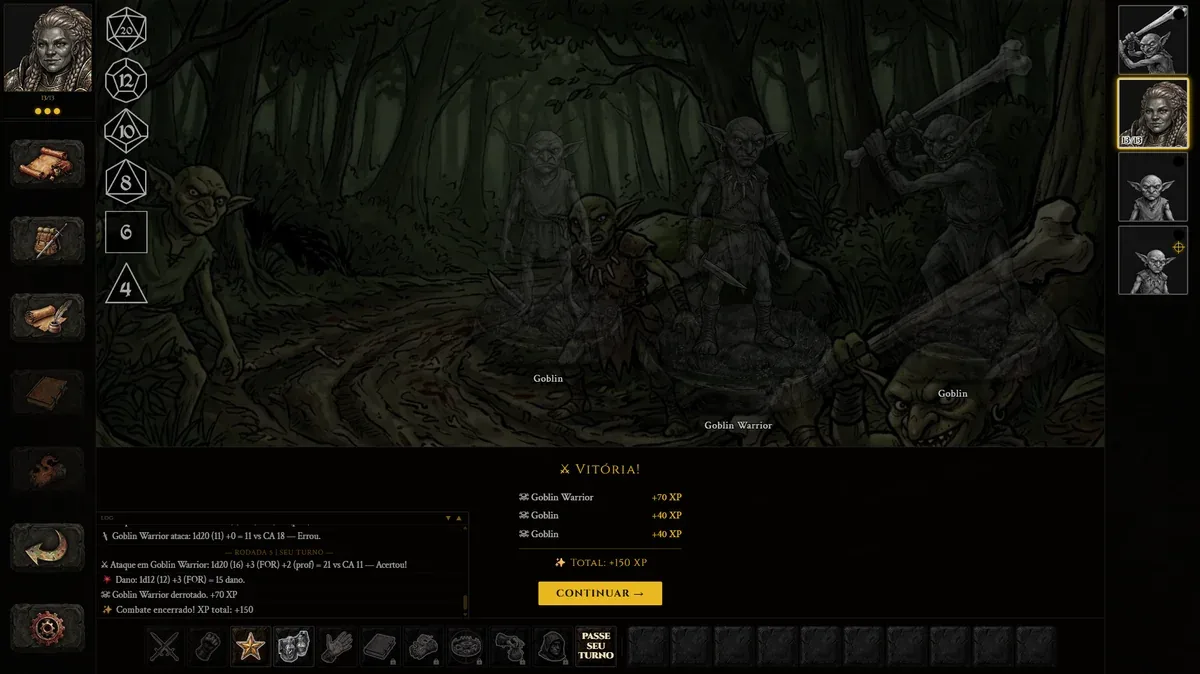
But if I decide everything, where's the surprise?
It's the most common question from anyone who's never played solo, and each path answers it differently. With oracles, the surprise comes from chance: you ask and the die answers things you didn't plan, so the story genuinely surprises you. In a gamebook, what's coming is kept hidden by the book itself, which plays the Dungeon Master's role. You pick a path without knowing what's on the next page, the same way you don't know what the DM prepared at a table. The trick is an old one: Gygax himself suggested sealing the answers in envelopes so you wouldn't spoil it for yourself. You decide your actions, not what the world hides from you.
How to start playing RPGs solo today
If you've never played solo, my advice is don't overcomplicate it. Grab a gamebook or Ironsworn (which is free) and just start; their structure teaches you as you play. Keep a little notebook or a notes app beside you to jot down what happens, because it's by writing it down that the story takes shape. And, most importantly, don't freeze trying to do it "right": in solo RPGs, you're the one who decides what's fun. Make mistakes, experiment, follow your curiosity. The adventure is yours.
What you gain, and what you give up
I'll be honest, because solo doesn't replace everything. You give up the good chaos of the table: the laughter with friends, the absurd move no one saw coming, the energy of everyone being together. Solo doesn't deliver that, and that's okay. In exchange, you gain freedom, pace, and the chance to go on an adventure today, right now, without depending on anyone. The way I see it, the two coexist just fine: solo is simply one more door that's always open to the hobby we love, for the days when the table can't happen.
And if you want the easiest version of that door, with nothing to prepare and nothing to install, Mysteries & Perils is my pick: an RPG gamebook you play right in your browser, solo, on your own time. [Join the waitlist] and follow the build.
By Mario, creator of Mysteries & Perils, a Baldur's Gate 1 fan raised on gamebooks.
Sources and further reading
- Solo role-playing game (Wikipedia)
- Mythic Game Master Emulator, official site (Word Mill Games)
- A Guide to Tools for Solo RPGs (Randroll)
- The Rise of Solo RPGs: A History (Waypoint)
- What Are Solo RPGs? An Introduction (Michael Ghelfi Studios)
- RPG Solo (Movimento RPG, Brazilian scene)
- Oracles (Solosfera RPG, Brazilian solo community)