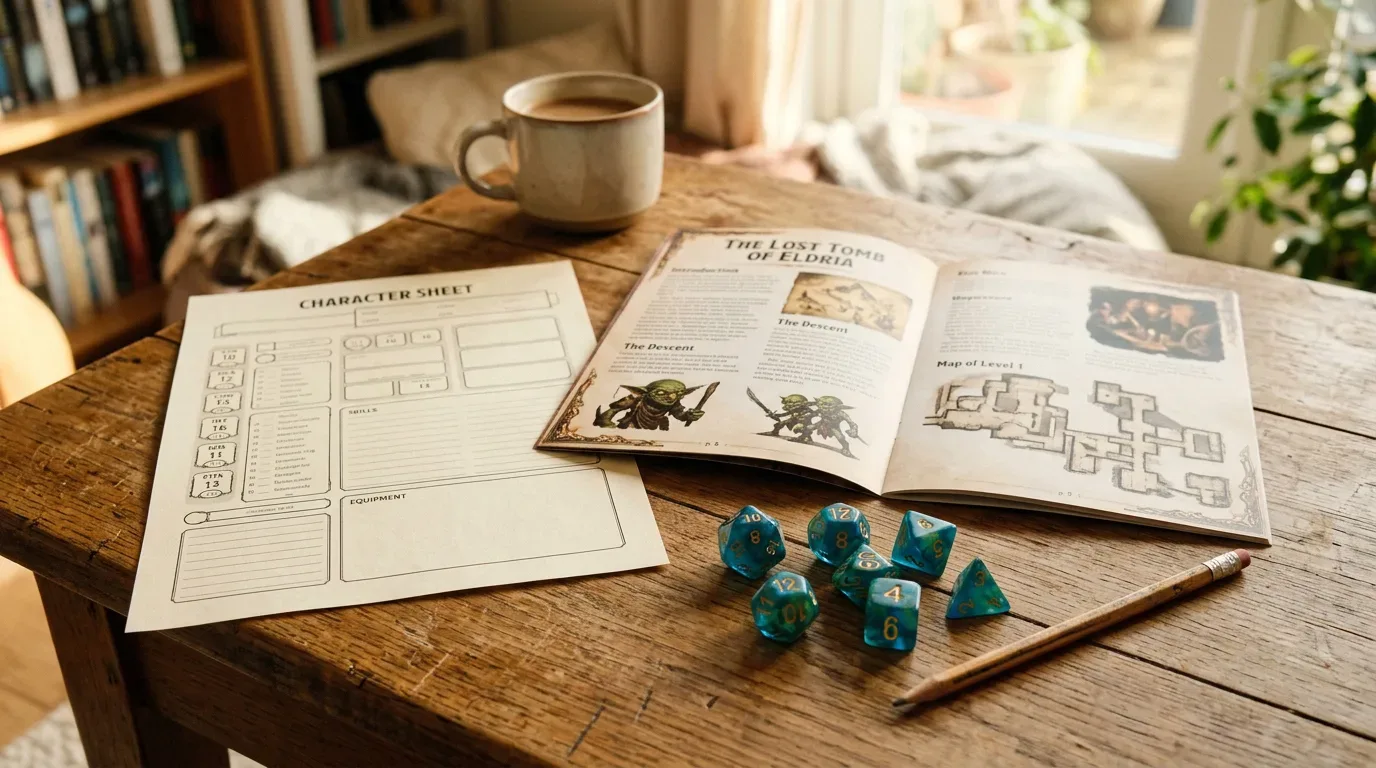
There's one scene that stops a lot of people at the door of RPGs: the giant rulebook sitting on the table, that thick tome of hundreds of pages, and the thought, "do I have to study all of this before I can sit down and play?" I get the fear, but let me put your mind at ease, speaking as someone who started as a kid, understood almost nothing, and never looked back. And the short answer is the one you were hoping to hear.
Do I need to know the D&D rules to start playing?
No. You don't need to know the rules to start, and there's no such thing as knowing "all" of them anyway, because not even the veterans do. You learn by playing, the same way you learned everything else you love doing. The rules sink in through practice, one session at a time, and nobody memorizes a manual to have fun.
What you actually need to know
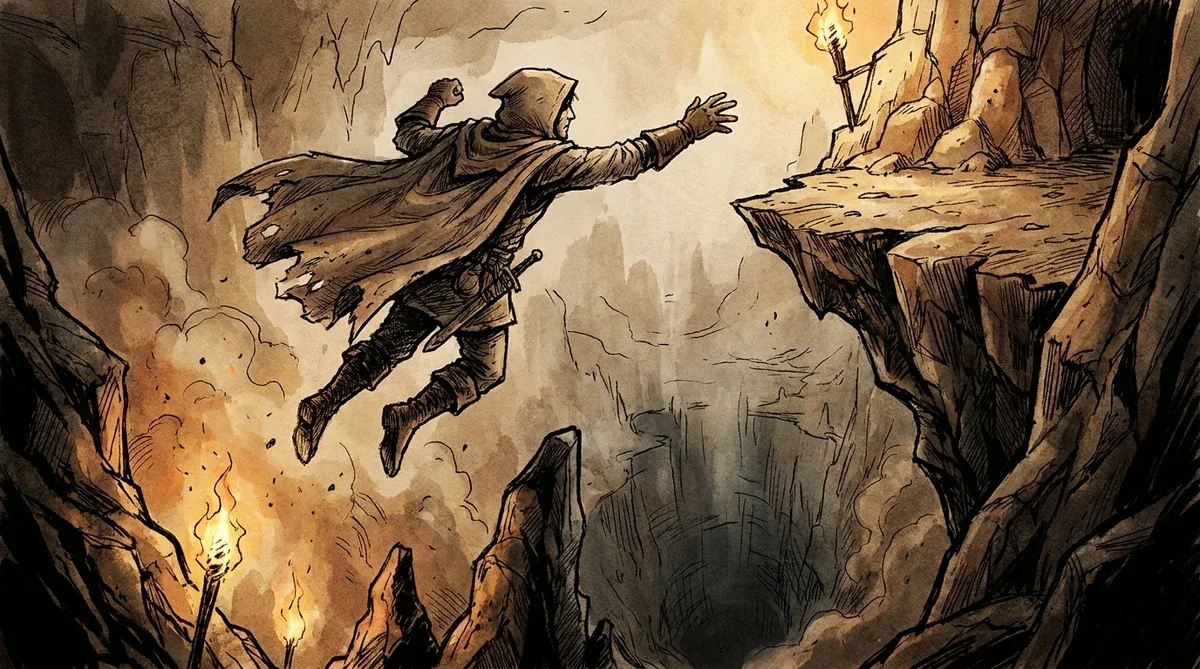
Very little, and it's freeing to realize it. Instead of memorizing the book, you just need to know your character and what they can do. Beyond that, the game works like this: you describe what you want to try, "I want to jump the chasm," "I want to win the guard over," and someone, the Dungeon Master at a regular table, tells you what to roll, if a roll is needed. A handful of basics help, like what your action and bonus action mean on your turn, or what your skills are for, but you'll pick that up in minutes and the rest comes on its own as the game unfolds; the most that can happen is the narrator saying "No, your character can't do that" or "Sure, you can try, but either you roll a 20 or you die!".
The 2024 edition was built to make exactly this easier
If you'd heard that D&D was complicated, know that things have changed, not that I'm a fan (I miss you, 3.5). The 2024 edition, the most recent one, had lowering the barrier to entry as one of its stated goals. Confusing rules were simplified, cases that used to stall the game were smoothed out, and the book now opens by teaching you how to play, instead of starting with character creation the way the previous version did. There's even a free set of rules to try before any commitment. In other words, D&D itself leaned toward making newcomers feel more welcome.
Do I need to buy the book to play?
Not necessarily. D&D itself offers a free set of rules so you can try it without spending a thing. And games that come with the rules built in, like a gamebook in your browser, skip the manual altogether: the rules come bundled with the adventure, ready to use. You can take the first step without a single doorstopper on your shelf.
Learning by playing is the natural way, not winging it
Think of any board game on a night with friends. Nobody reads the whole manual before starting. One person explains the basics, the first round is a bit of a mess, and by the second everyone's got the hang of it. You learn by playing, because that's how the human brain holds on to a rule: tied to a moment, a move, a laugh, not to a paragraph read in a vacuum. RPGs are exactly the same. The rules that look dry on paper become second nature the instant you use them to do something that matters to the story.

And what if I have no one to teach me?
That's the real hurdle for anyone wanting to start tabletop RPGs on their own. At a table, there's a DM and more experienced friends to guide you the first few times. Without them, the beginner is left stranded, staring down that doorstopper with no teacher in sight. That was always the gap between the curiosity and the first session. The desire was rarely the problem; what was missing was someone patient beside you to say "now roll the die."
In Mysteries & Perils, the game itself is your guide
And that's exactly the gap I set out to fill with Mysteries & Perils. In it, the role of that patient friend is played by the game itself. You don't need to know a single table or open a manual: the game guides you, handles the 2024 5th-edition rules behind the scenes, and lays out your options clearly when it's time to decide, without you having to know the rule underneath. Someone who's never played is taken by the hand, at their own pace. Someone with miles behind them recognizes everything at once and feels right at home. The intimidation of the thick book simply doesn't exist here, because the machine holds the rules and leaves you the good part: deciding and living the adventure.
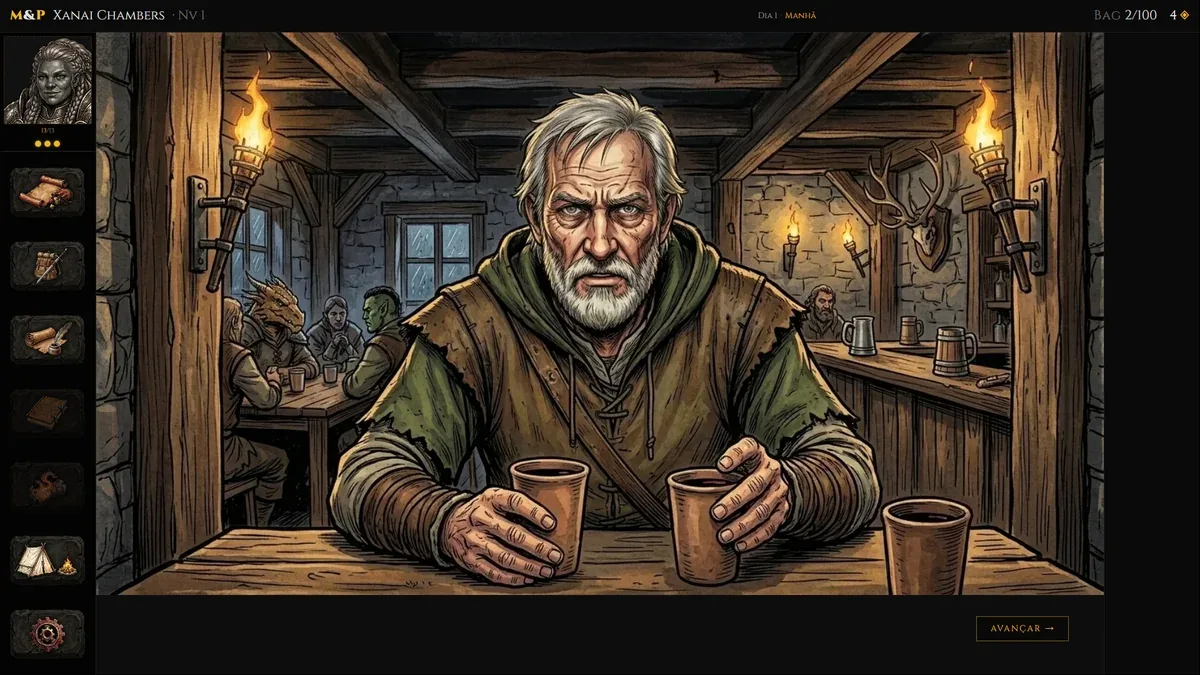
If the only thing holding you back was thinking you had to become an expert before playing, that reason is gone. [Join the waitlist] and come in through the easiest door RPGs have ever had.
By Mario, creator of Mysteries & Perils, a Baldur's Gate 1 fan raised on gamebooks.