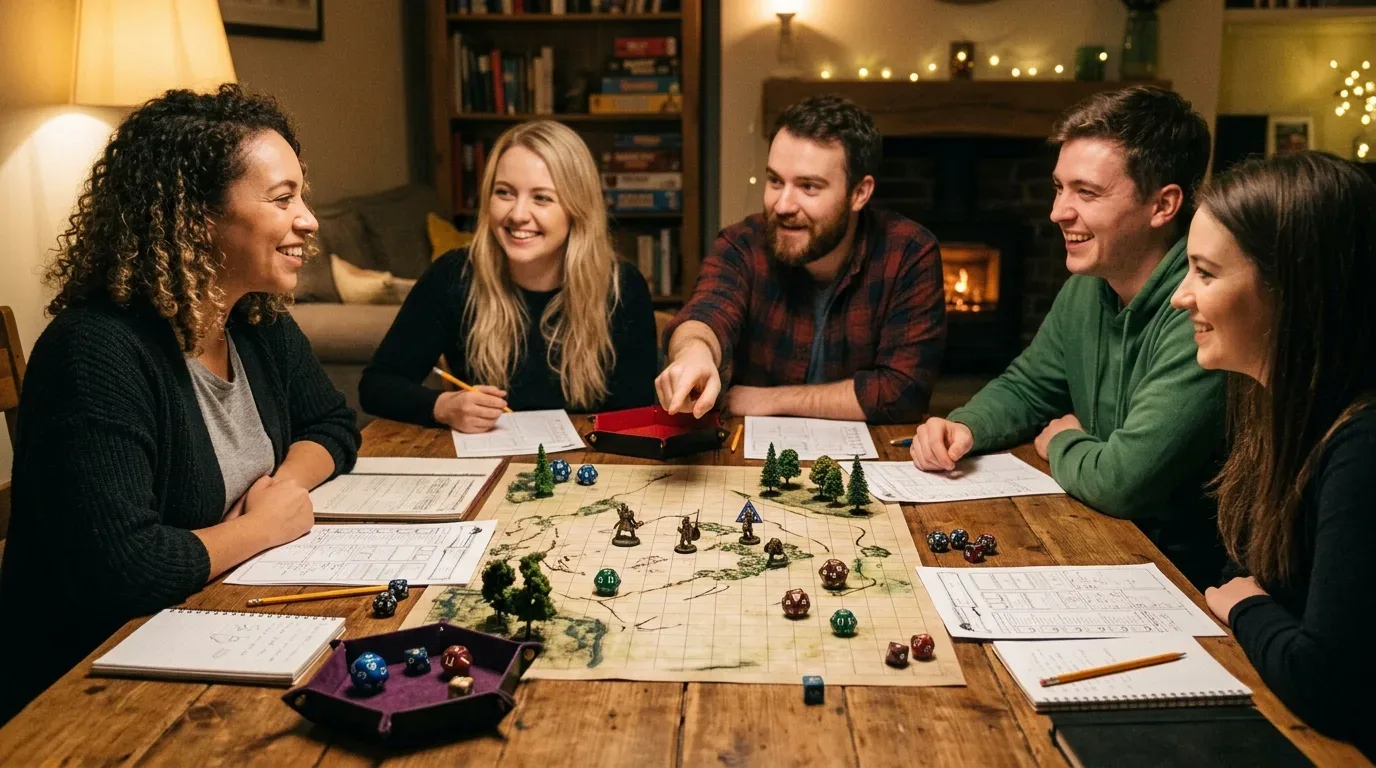
There's a strange moment after you finish a game you loved. The credits roll, the screen goes dark, and instead of satisfaction comes a slightly foolish emptiness, almost a longing for something you just lived through. With Baldur's Gate 3, that emptiness hit a lot of people at once, me included, someone who has loved this series since the very first Baldur's Gate. If you landed here typing "finished Baldur's Gate 3, what now", the good news is that this craving has somewhere to go.
Baldur's Gate 3 is over. Why do you crave more?
Because BG3 didn't just hand you a good game, it gave you a concentrated dose of the real thing: choices that change the story, dice rolling on the screen, a character that's yours, and the feeling of being inside the adventure rather than watching it. That hunger doesn't end with the credits, because what hooked you goes beyond that particular story: it's the very way of experiencing stories like this. And that way of playing is something you get to keep.
What Baldur's Gate 3 did so well
It's worth understanding the scale of what happened, because it wasn't luck. Baldur's Gate 3, from Larian Studios, took the 5th edition rules of Dungeons & Dragons, the biggest tabletop RPG in the world, and turned them into an extremely polished digital game. The d20 rolling to decide each action, advantage and disadvantage, the ability scores, the classes: it's the same backbone as a tabletop RPG, alive on the screen, with a few liberties Larian took to fit a video game.
The result was historic. The game swept the awards and became the first to win Game of the Year at the industry's five biggest ceremonies, including The Game Awards 2023, and sold more than 20 million copies worldwide. Beyond the numbers, it did something rare: it pulled millions of people into the world of tabletop RPGs, to the point that commentators spoke of the biggest cultural moment for the hobby in many years. For a lot of people, BG3 was their first gateway into this world.
The detail you may not have noticed
And there's a subtle point here that helps explain your own longing. As huge as it is, the story of Baldur's Gate 3 is fixed. You make wonderful choices inside it, but the script was written and filmed before you arrived, and the same world waits for everyone who plays. It's like a spectacular theme park: the roller coaster tracks are incredible, but they're already built, and you ride the path someone else laid down.
What that post-credits hunger usually asks for is more of that: more stories where your choices truly matter, more adventures to live as the protagonist. At a tabletop, you even help lay the track yourself, alongside the game master. In the formats made for one person, you travel new tracks with each adventure, each one written to respond to your decisions. It all grows from the same root: the RPG, and that's where this craving points.
Where to take the itch for adventure
There are three honest paths, and they don't compete, they complete each other.
The first is a real tabletop RPG: gather a group, have a game master, and play through a campaign where the story bends to everyone's choices. It's the most complete experience there is, and it's no accident that it inspired BG3.
The second is solo RPG, playing on your own with the help of systems and tables that act as the game master, answering the questions you put to the world. It won many fans precisely because it doesn't depend on anyone's schedule.
The third is the gamebook, that format where you're the protagonist of a written adventure and each decision sets the course of the story. It's the closest cousin to the feeling BG3 gives, that sense of being inside the story, only in a more intimate format made for one person.
If the problem is time and a group
Here's where adult life hits. Tabletop RPG is wonderful and depends on gathering people, setting a night and everyone showing up, a scheduling puzzle that doesn't always come together. Plenty of people discovered BG3 in the first place precisely because they couldn't get a group together. If that sounds like you, the solo paths, solo RPG and the gamebook, exist exactly for this: to deliver the adventure without depending on anyone else, on your schedule, at your pace.
Where Mysteries & Perils comes in
I built Mysteries & Perils for that specific hunger, the hunger of someone who got their first taste of RPG in a game like BG3 and wants to keep living adventures with choices that matter, without it turning into a scheduling project. It's an RPG gamebook that runs in your browser, built on the modern 5th-edition tabletop ruleset in its latest, 2024 form, the same rules family Baldur's Gate 3 brought to the screen in its earlier version, inside an adventure written and illustrated by hand. You create your character, decide every step, roll the dice and watch the story respond to your choices, on your own, in sessions that fit a tired evening or a free afternoon.
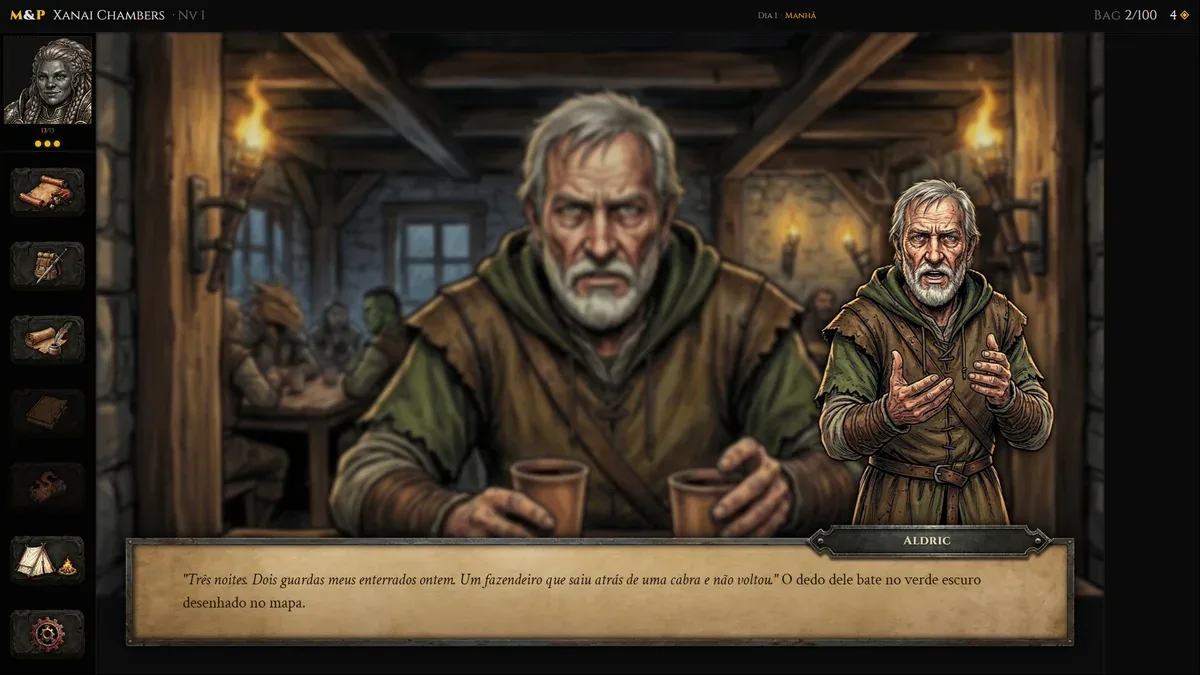
To be honest, it's not the blockbuster-budget theme park that BG3 is, and it doesn't try to be. What it offers is something else, something that fits real life: leading your own journey, with the weight of every choice in your hands, in an intimate format built to grow with new adventures over time rather than run out at a single ending. If that post-credits longing is still there, join the waitlist and follow along as it takes shape.
By Mario, creator of Mysteries & Perils, a Baldur's Gate 1 fan raised on gamebooks.